.svg)





 Affordable Financing
 Below Ground Range Colours
 Fibreglass Pool Install Stages
G'day DIY Pool Planners.
Owning a fibreglass pool in Australia is all about easy upkeep and high enjoyment. With their smooth, non-porous surface and long warranties, fibreglass pools are a smart investment, not just for their durability but also for how little effort they take to maintain compared to concrete or vinyl liner alternatives.
That said, every pool, no matter how low-maintenance by design, needs a seasonal routine. As Aussie temperatures rise and fall, rainfall fluctuates, and your pool goes from "daily dip" to "rain collector," how you care for it needs to shift too.
This seasonal maintenance guide will walk you through exactly what to do throughout the year, ensuring crystal-clear water, efficient operation, and stress-free ownership.
Why Maintenance Timing Matters for Fibreglass Pools
Unlike concrete pools, which are prone to blackspot algae, use more chemicals and require more scrubbing, fibreglass pools are easier to keep balanced thanks to their impermeable gelcoat surface. Still, UV exposure, bather load, rainfall, and ambient temperature all affect your water chemistry. Ignoring these shifts can lead to problems like cloudy water, staining, or equipment strain.
A consistent maintenance routine helps you:
- Prevent algae and staining
- Keep water safe and sanitised
- Extend the life of your pump, filter, and other components
- Save money on chemicals and energy
Let's break it down by season.
Summer Pool Care (December - February)
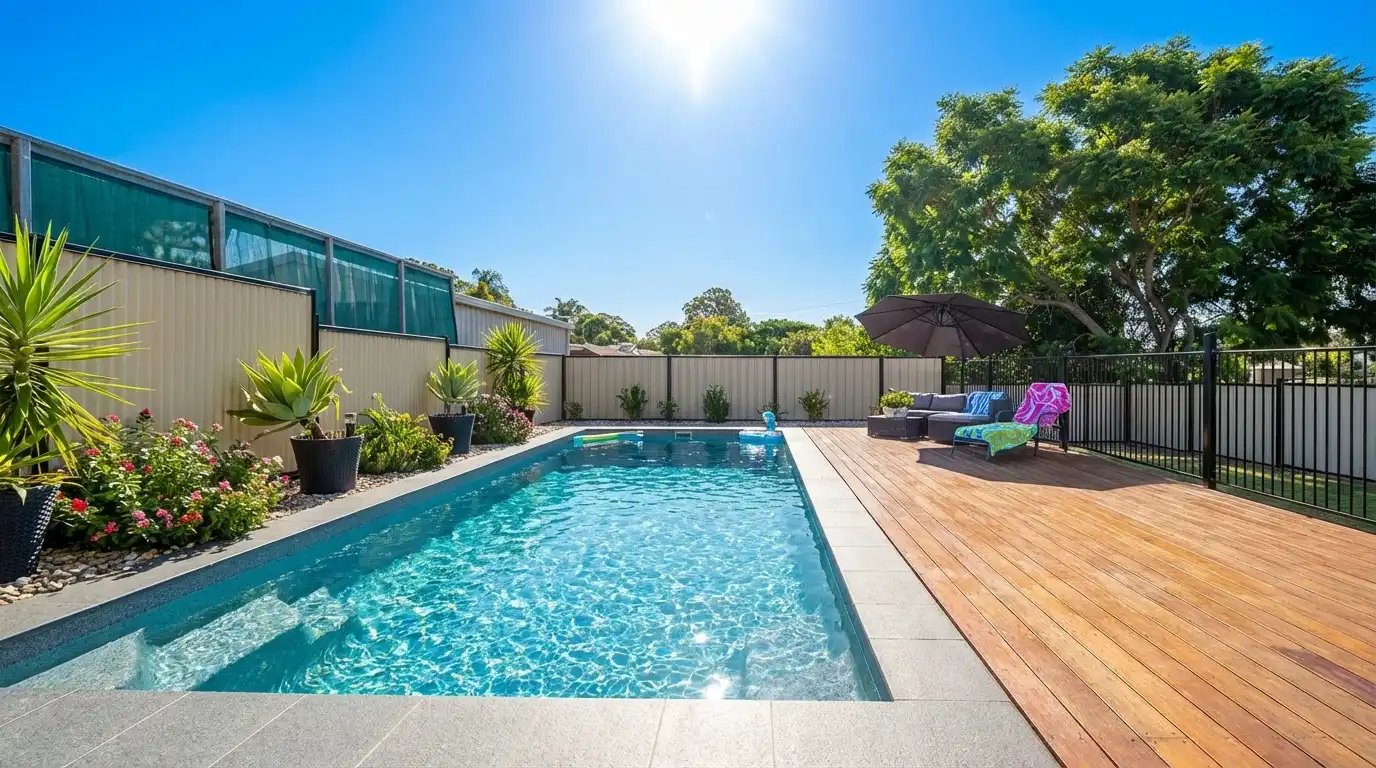
Summer is peak swimming season in Australia, which means your pool will be under the most pressure from both the sun and swimmers. UV rays degrade chlorine quickly, bather loads skyrocket and your equipment is put to the test.
Chemical Testing
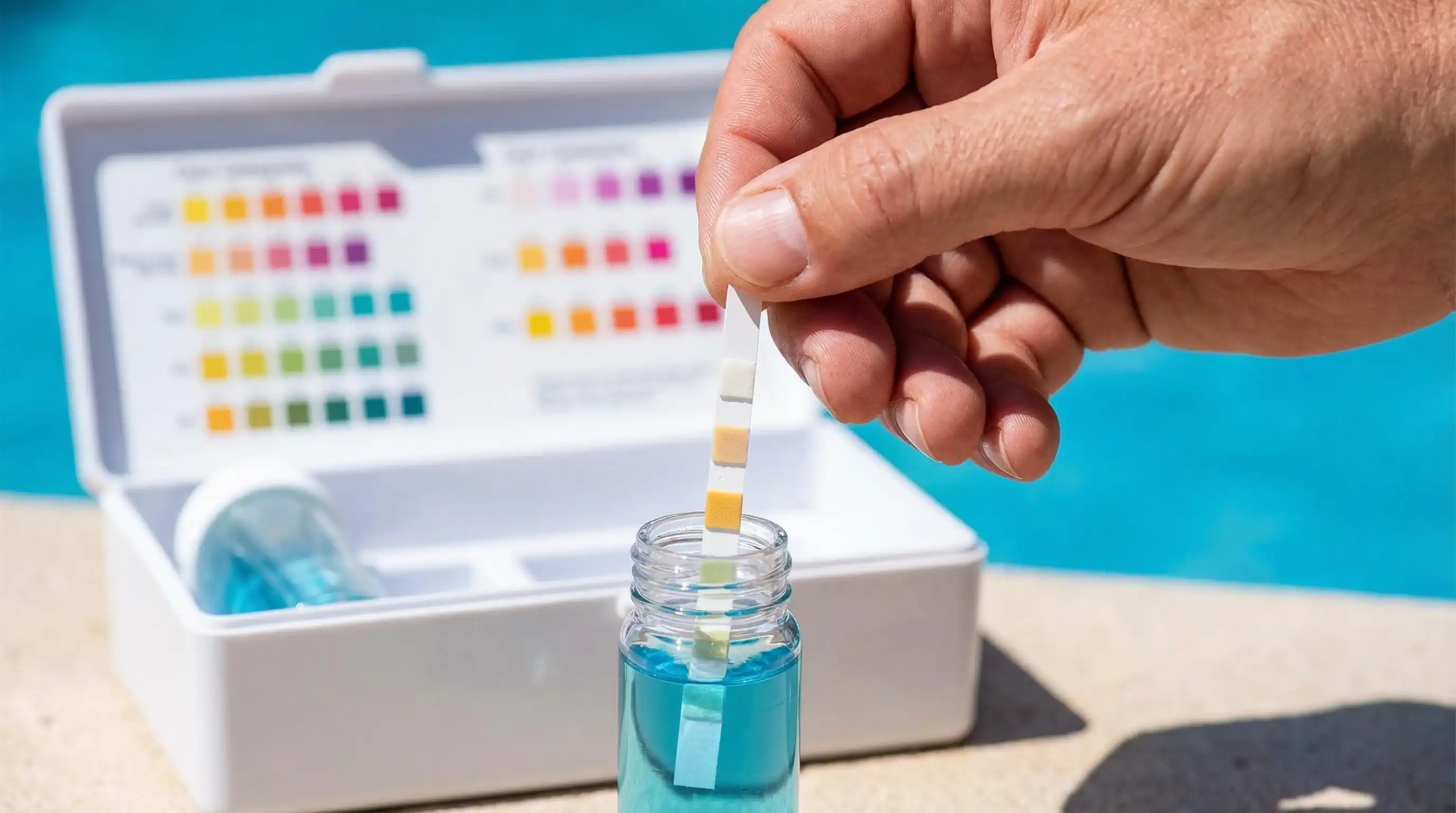
- Test the water at least once per week
- Maintain:
- pH: 7.2 - 7.6 (ideal for fibreglass)
- Free chlorine: 1.5 - 2.5 ppm
- Alkalinity: 80 - 120 ppm
- Calcium hardness: 120 - 300 ppm
In summer, if you have four or five people in the pool for a few hours, your pH will rise and your chlorine levels will drop. With the pool in use every day or with temperatures over 30 degrees, daily chlorine and pH testing is often needed to keep your water safe and sanitised.
Filtration and Pumps
- Run your pump 8 hours per day
- Clean your cartridge filter every two weeks or when needed if the pool is not being used frequently
- Backwash your sand filter every four weeks or sooner if needed
Weekly Maintenance
- Skim leaves and vacuum debris: In fibreglass plunge pools, this is often just a 10-minute job per week or even less if you have a cordless robot cleaner
- Empty pump and skimmer baskets weekly (or more often if surrounded by trees)
- Monitor water levels: Top up if evaporation brings levels below halfway on your skimmer opening
Autumn Pool Care (March - May)
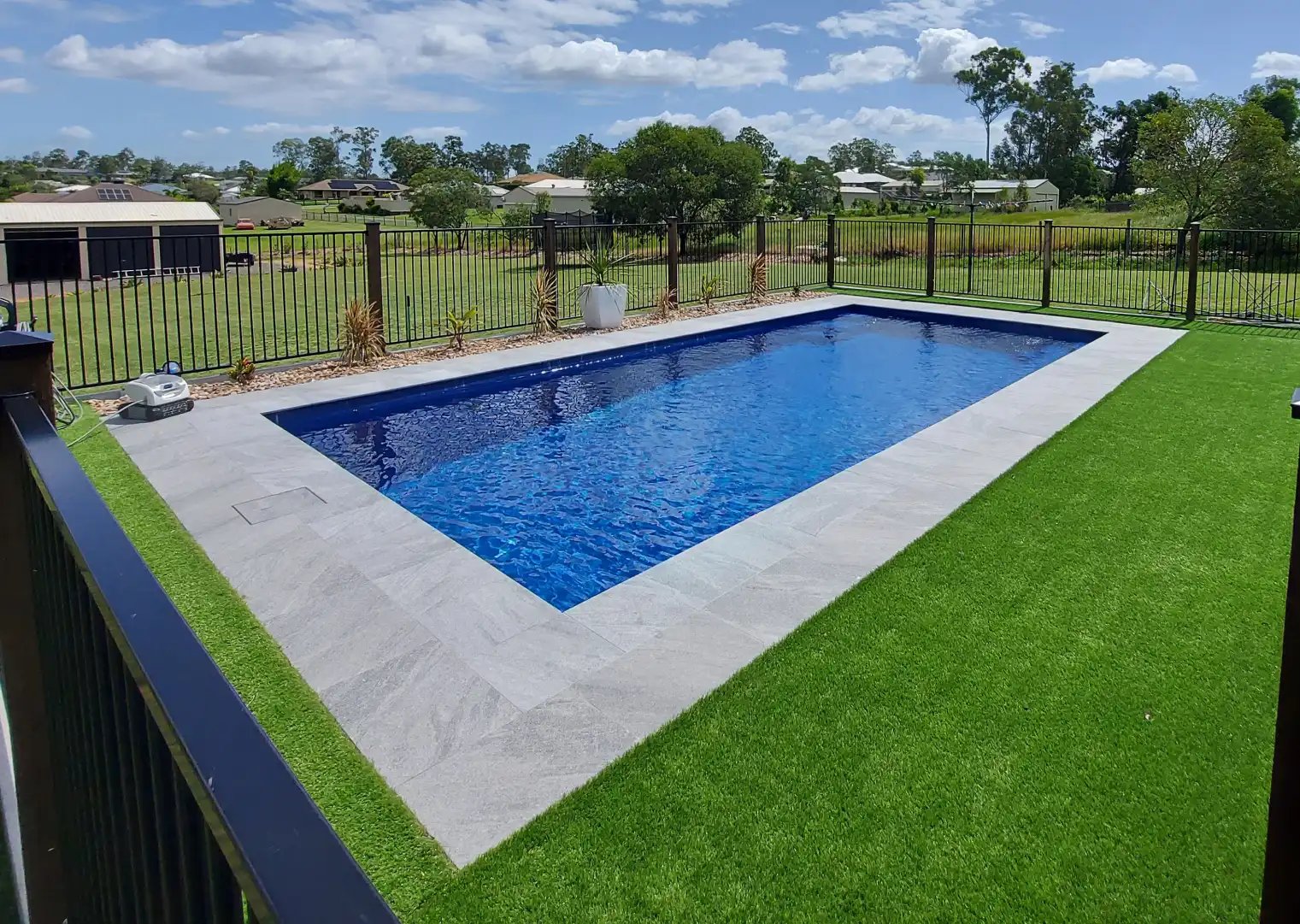
Autumn may bring fewer swimmers, but it brings plenty of leaves, fluctuating weather, and the temptation to ease off on maintenance. Resist that urge as autumn is the transition period that sets the tone for winter.
Debris Management
- If you've got deciduous trees nearby, increase skimming and basket emptying
- Don't let leaves settle - they consume chlorine and may stain your fibreglass surface.
Filtration Adjustment
- Gradually reduce pump run time to 6 hours per day
- Adjust chlorine dosage slightly downward as temperatures drop, but continue weekly water testing if the pool is still being used or there has been a lot of rain
Autumn Testing Notes
- Cooler water slows chemical reactions so changes may take longer to stabilise
- Rainfall can dilute chlorine, lower pH, and bring contaminants such as phosphates
- Test your pool after major rain events to catch imbalances early
Winter Pool Care (June - August)
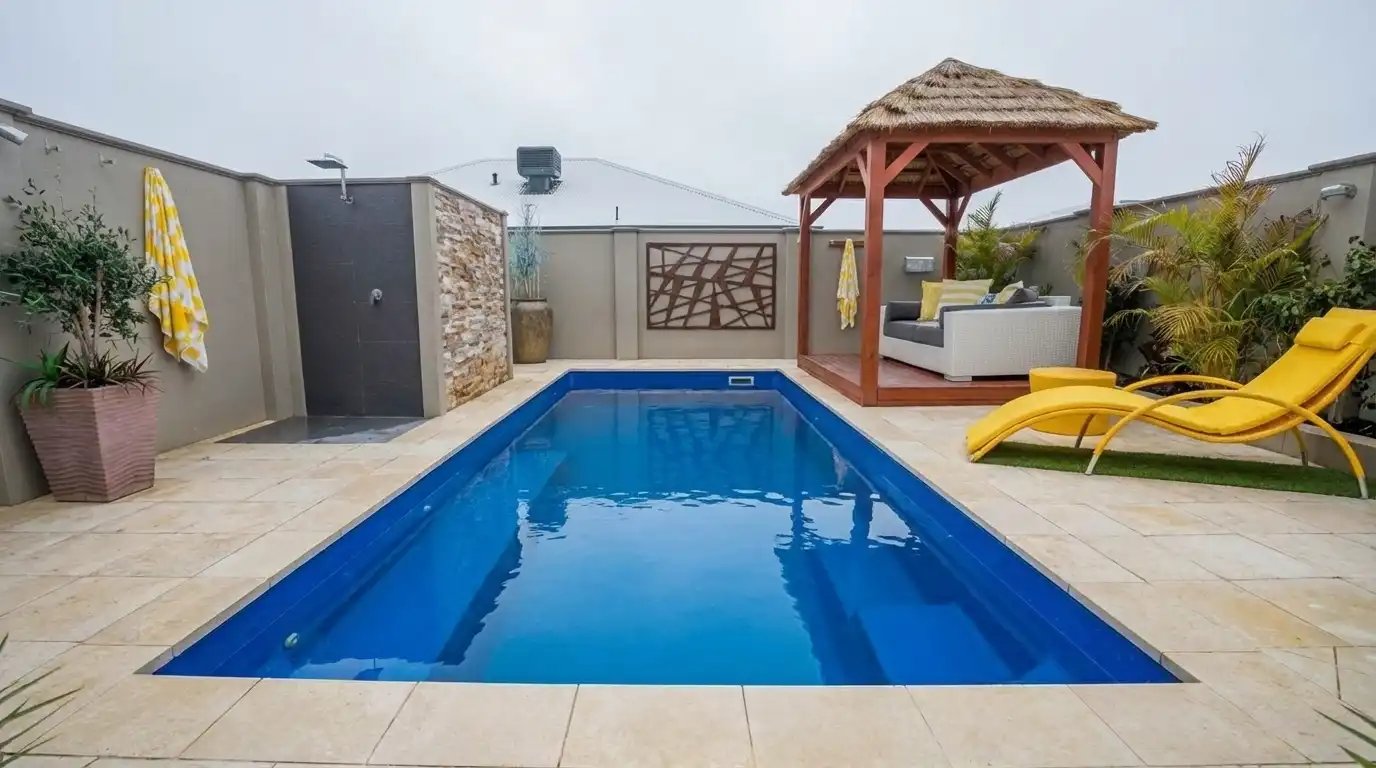
Winter doesn't mean walking away from your pool. Even if you're not swimming, you still need circulation and sanitisation to prevent algae, corrosion, and scale buildup.
Equipment Operation
- Reduce pump run time to 4 - 6 hours per day, ideally split into two short cycles to prevent stagnation
- Don't turn your system off entirely unless you live in a frost-prone region and have winterised your setup (rare in Australia)
- Empty pump and skimmer baskets fortnightly (or more often if surrounded by trees)
- Do not leave your pool blanket on for winter. Some of the chlorine in your pool will be converted into chlorine gas, which can leave a bleach line around your pool if left trapped under your pool blanket for too long. If you are using a pool blanket, pull back at least a third of the blanket each week and let your pool breathe for a few hours to release any trapped chlorine gas.
Cleaning
- Give your pool and equipment a deep clean at the start of winter. Leaves and organic matter can leach tannine (and other stain-creating stuff), which can leave a stain on your pool surface.
- Deep clean your filter - all filter types (sand, glass or cartridge) slowly build up with body fats, skin oils, sunburn cream and grime that your usual cleaning doesn't remove. Head to your pool shop, get a bottle of filter cleaner and degreaser and follow the instructions. Aside from a healthier pool needing fewer chemicals, you will extend the life of your sand or glass media or cartridge filter element.
- Inspect the salt cell on your chlorinator for scale and calcium buildup - cleaning this will improve the efficiency of the cell and extend its life. Check your chlorinator manual for the manufacturer's recommended cleaning procedure. Self-cleaning salt cells are low maintenance, not no maintenance, so you still need to inspect and clean if required.
- Temporarily superchlorinate your pool - this kills any pesky bacteria and algae spores that might be in residence after the swimming season. Ask your local pool shop for a bottle of pool shock (concentrated chlorine) and follow the directions on the label. Alternatively, you can increase the output of your chlorinator to 100% and run the pump for at least 8 hours to ensure the chlorine is fully distributed throughout the pool. Following this, immediately turn your chlorinator output to well below your swimming season setting, as you will need less chlorine in winter. Make sure to remove your pool cover while super-chlorinating and only replace it once your chlorine levels have returned to the normal range.
- Check your pool every week for leaves on the floor or steps of your pool
Chemical Testing
- A week after super-chlorinating your pool, take a sample of your pool water down to your local pool shop for testing (most pool shops in Australia will test your water for free). Ask for the test to also check for phosphates (they kill the chlorine in your pool):
- Balance your pH levels - Check your pH levels are in the optimal range (between 7.2 and 7.6) and add pH up or pH down as needed.
- Add algaecide and phosphate remover - a good quality long-life copper-based algaecide will help prevent algae from growing in your pool water for up to 3 months. Use a good quality phosphate remover if your pool water test shows there are phosphates present.
- Test the water monthly at a minimum
- Maintain your water chemistry:
- pH: 7.2 - 7.6 (ideal for fibreglass)
- Free chlorine: 1.5 - 2.5 ppm
- Alkalinity: 80 - 120 ppm
- Calcium hardness: 120 - 300 ppm
- Use slow-release chlorine floaters or tablets if your system is on reduced run time
Turn Your Pool Lights On For 30 Minutes Once Per Week
All LED pool lights have a small amount of condensation continuously forming inside the light from being submerged. During the swimming season, this condensation is usually burnt off by the heat generated when the lights are in use.
Over the cooler months, if the lights are not turned on, condensation builds up to a level that can cause the light to fail when turned on again. LED lamps cost around $350 to replace so the few cents a week in extra power costs is a bargain!
Water Balance After Storms
- If you get heavy rain, test again immediately
- Rainwater often reduces pH and alkalinity while adding phosphates (algae food)
Spring Pool Care (September - November)
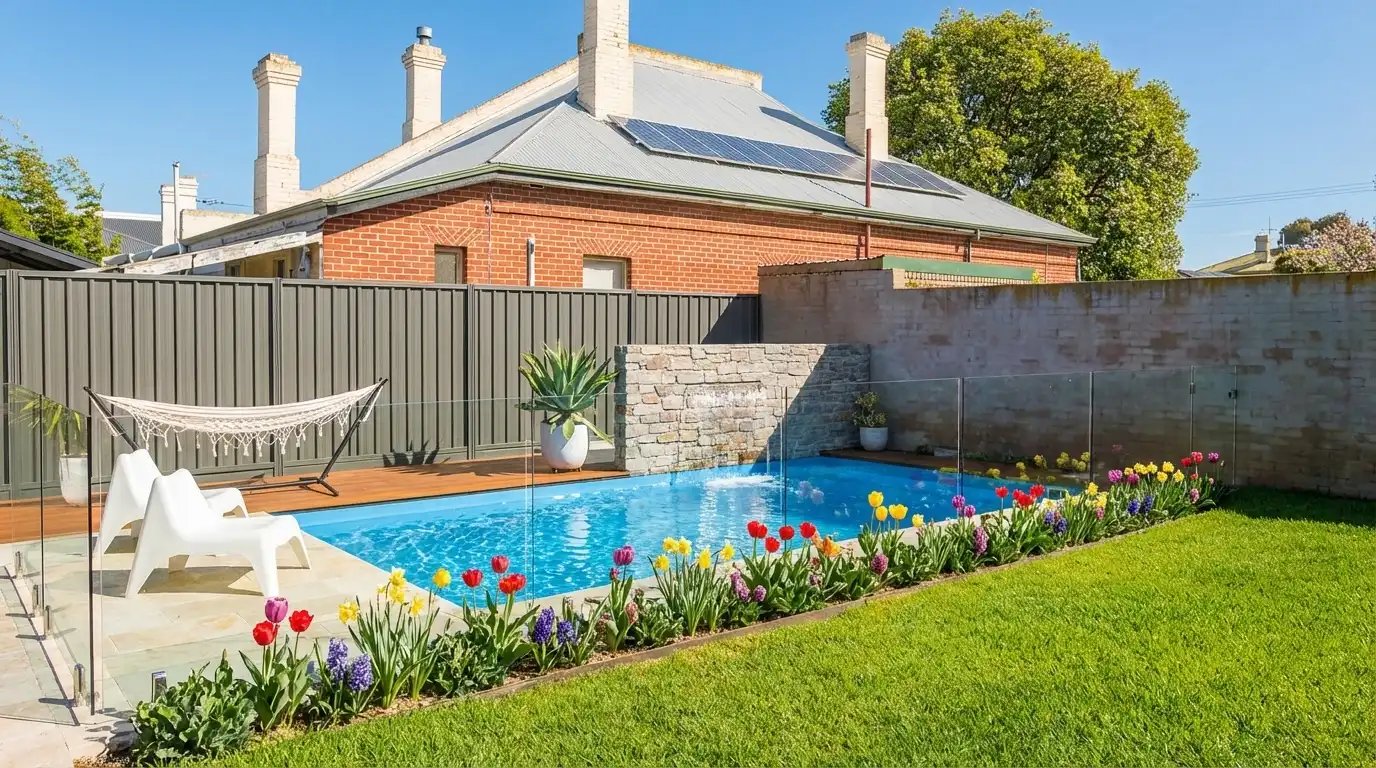
Think of spring as your "pre-season training". It's time to bring your pool back to life. Warming temperatures can trigger dormant algae spores, so early action helps prevent costly recovery.
Deep Cleaning
- Manually brush the walls, steps and floor
- Vacuum the pool floor to waste
Chemical Prep
- Rebalance water
- If algae is visible or the water is green/cloudy, shock the pool
- Resume fortnightly testing or weekly if heating the pool and starting your swimming season early
Quick-Reference Seasonal Task Table
| Task | Summer | Autumn | Winter | Spring |
|---|---|---|---|---|
| Pump Run Time | 8 hrs/day | 6 - 8 hrs/day | 4 hrs/day | 4 - 6 hrs/day |
| Water Testing Frequency | 1- 3x per week | Fortnightly | Monthly | Fortnightly |
| Basket Cleaning | Weekly+ | Weekly+ (more with leaves) | Weekly | Weekly |
| Filter Cleaning (cartridge) | Fortnightly | Fortnightly | Monthly | Fortnightly |
| Filter Cleaning (sand) | Monthly | Every 1 - 2 Months | Every 2 Months | Every 1-2 Months |
| Surface Skimming | Weekly - as needed | Weekly - As needed | Weekly | Weekly |
| Vacuuming | Weekly | Weekly | Fortnightly | Weekly + shock if needed |
| Shock Treatment | As needed | Rare | At start of winter | Optional pre-season |
Final Tips from the Complete Team
- Pool cover: Use in summer and spring to naturally heat your pool, prevent 95% of water evaporation and to reduce chemical use. Use in winter and autumn to reduce leaf debris
- Equipment placement: Make sure your pump, filter and chlorinator (and any other equipment) are not under constant direct sun, as UV exposure will shorten your equipment's service life by years and can void the manufacturer's warranties
- Regular check-ins: Even if you're not swimming, walking past your pool once a week and checking water clarity, baskets, and the sound of your pump can help prevent nasty surprises
- Equipment longevity: Well-maintained gear lasts longer. Routine care avoids expensive emergency replacements
When to Call a Professional
Your DIY fibreglass pool is designed to be low-maintenance and owner-friendly, but if you hit one of the following issues, consider professional help:
- Persistent algae or cloudiness despite proper testing
- Plumbing leaks or pressure drops
- Pump noise or filter failure
- Major chemical imbalance post-storm
At Complete Fibreglass Pool Kits, we're here to help long after installation. If something doesn't look right, reach out, and we'll guide you on the best next step so you can keep your pool running all year round smoothly.
More Reading from Complete Fibreglass Pool Kits
Check out these other helpful guides and blogs:
DIY Fibreglass Pool Installation Process from Start To Finish
Step-by-step walkthrough on excavation, plumbing, and setup for your fibreglass pool - ideal for owner-builders.
Tips for Building a DIY Fibreglass Plunge Pool on a Budget
Smart savings strategies and practical advice to get your dream plunge pool without overspending.
Choosing the Right DIY Swimming Pool Kit for Your Budget and Space
Compare pool types, sizes, and costs to find the perfect setup for your backyard.
Grab a quote for your dream pool!


