.svg)






 Affordable Financing
 Below Ground Range Colours
 Fibreglass Pool Install Stages
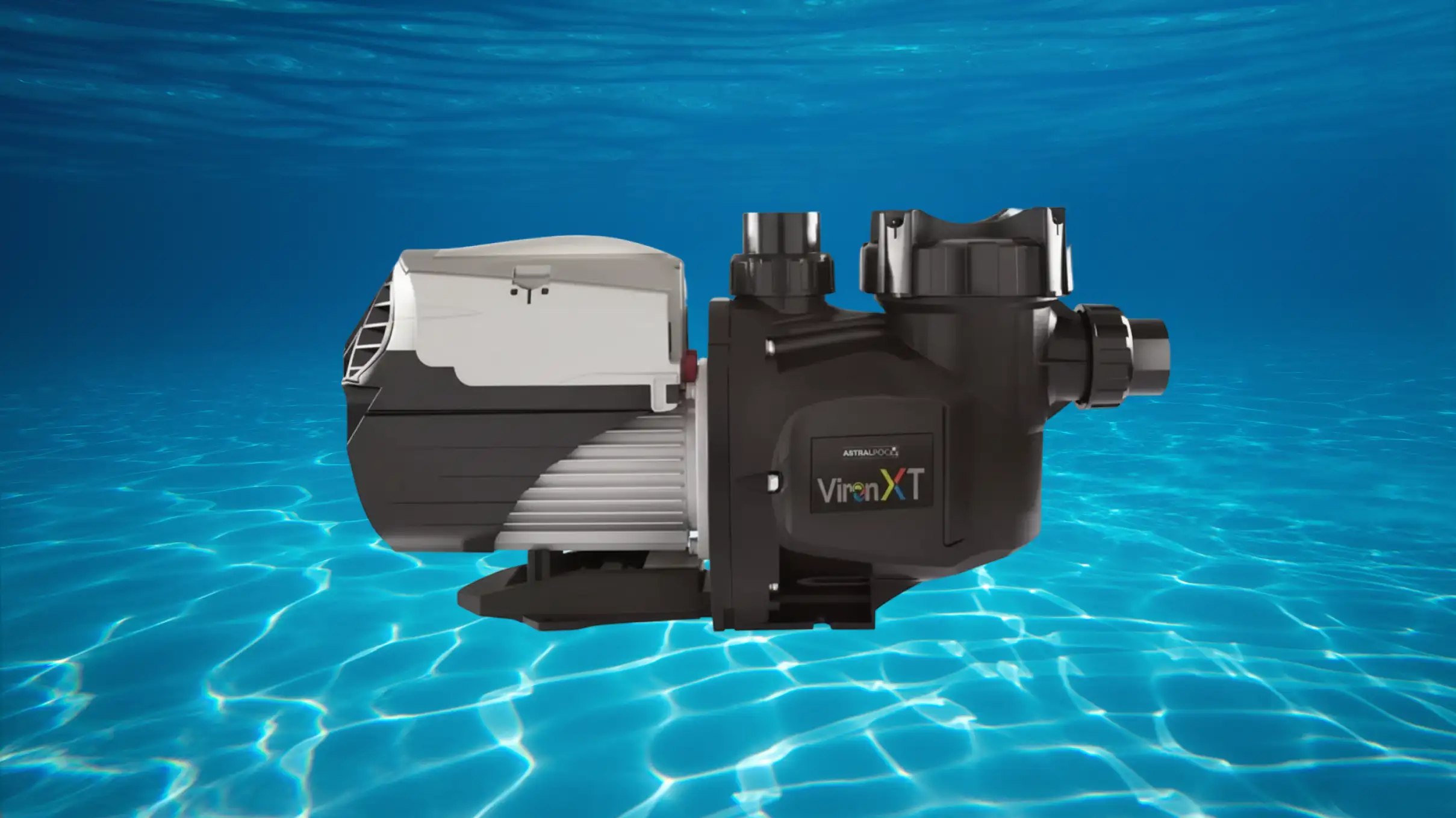
Your pool pump is one of the hardest-working appliances in your home and depending on the type you choose, it could be quietly sipping power in the background or hammering your electricity bill every single day.
The choice between a variable-speed pool pump and a single-speed pump isn't complicated once you understand what you're actually comparing. This article breaks it down clearly: how each pump works, what it costs to run, how loud it is, and which one makes sense for most Australian pool owners in 2026.
Watch: The Noise Difference Between Variable Speed and Single Speed Pumps
Variable Speed vs Single Speed Pool Pump: Quick Answer
For most Australian pool owners, a variable speed pool pump is the better choice.
It uses significantly less electricity, runs much quieter, and typically pays for itself within 12–18 months through energy savings.
Single-speed pumps are cheaper upfront but cost far more to run long term.
Quick comparison:
| Variable Speed Pump | Single Speed Pump | |
|---|---|---|
| Upfront cost | Higher | Lower |
| Running cost | Much lower | High |
| Noise | Very quiet | Loud |
| Energy efficiency | 5–6 star | Often 1–3 star |
| Best for | Most pools | Tight budgets |
What Does a Pool Pump Actually Do?
Think of your pool pump as the heart of your pool's filtration system. Its job is to push water through the filter and chlorinator, strip out debris, bacteria and particles, and circulate treated water back into the pool continuously all day, every day.
Get the pump right, and your water stays clear with minimal effort. Get it wrong with the wrong type, wrong size, wrong settings, and you'll be fighting algae, cloudy water, and a power bill that makes you wince.
What is a variable speed pool pump?
A variable speed pool pump can run at multiple speeds, from an ultra-quiet, energy-efficient low-speed filtration mode up to full power for backwashing or vacuuming. Unlike a single speed pump that runs at full power all the time, a variable speed pump's output can be adjusted to suit what the pool actually needs. This can reduce power bills by up to 80% compared to a single speed pump
Single Speed Pumps: Lower Upfront Cost, Higher Long-Term Price
Single speed pumps have been the standard for decades, and they do what the name suggests: they run at one fixed speed, full power, from the moment you switch them on to the moment you switch them off. No adjustment, no variation, no flexibility.
On paper, the upfront price looks attractive. Single speed pumps are cheaper to buy. But that's pretty much where the advantages stop.
The real cost of running at full power all day
Single speed pool pumps are sized to handle the highest demand tasks a pool will ever need to perform, such as vacuuming the pool or backwashing the filter. The issue is that a single speed pump can only operate at that one maximum output. Even during normal day-to-day filtration, which typically requires around 70% less water flow, the pump continues running at full speed. It's essentially like a car permanently stuck in top gear, using far more electricity than the pool actually needs.
Pool pumps are one of the most energy-hungry appliances in an Australian home. In some households, they can be as much as 30% of your energy bill. Running a single speed pump year-round adds up fast, and with electricity prices continuing to rise across Australia, that full-speed operating cost becomes a genuine drain on the household budget.
Single speed pumps are working hard from Day One which means they generally have an expected service life of between 3 and 6 years before needing to be replaced.
The noise problem
Single speed pumps are also noticeably louder than variable speed pumps. A variable speed pump running on low filtration speed typically produces around 30 decibels, which is about the same sound level as a quiet library. A typical single speed pump operates closer to 55 decibels, which is similar to the background noise in a moderately busy café.
Here's the part most people don't realise: sound doesn't increase in a straight line. Every increase of about 10 decibels roughly doubles how loud something sounds to our ears. So when you compare 30 decibels to 55 decibels, the single speed pump can be around five to six times louder in real-world terms. In other words, it's the difference between a pump you barely notice and one you'll hear every time you're sitting outside.
If your pump is located near a living area, bedroom, outdoor entertaining space, or anywhere you actually want to enjoy, the constant drone of a single speed pump running at full noise can become genuinely intrusive. It's the kind of thing that starts as background noise and ends up being all you can hear.
Who is a single speed pump right for? If the pump sees very infrequent use powering spa jets or heating separately from your filtration pump, you're working with a very tight initial budget, or you're replacing a pump as a short-term measure, a single speed pump will get the job done. But for most Australian households running a pool through our long, hot summers, it's the more expensive option over time.

Variable Speed Pool Pumps: Why They've Taken Over the Australian Market
Variable speed pool pumps use a permanent magnet brushless DC motor, the same technology found in electric vehicles, that lets you dial the pump up or down depending on what your pool needs at any given moment. Think of it like a dimmer switch on a light. That flexibility is everything.
Low speed is where the savings live
Here's something pool owners don't realise until they've lived with one: a variable speed pump spends the vast majority of its life running on low speed. Typically, 80–90% of operating time is in day-to-day filtration mode - the quiet, low-draw setting that keeps your water circulating and your chlorinator doing its job.
High speed is reserved for the jobs that actually need it: backwashing your filter, manually vacuuming the pool, or when your automation system requests a boost to produce more chlorine. Medium speed covers the in-between tasks like running a water feature. The rest of the time, it's barely audible.
Going back to our car analogy, a variable speed pump spends most of its life cruising comfortably rather than running flat out. Because the motor isn't running flat out, there's far less wear over time. That's why many variable speed pumps commonly deliver a service life of up to around 10 years, which is often close to double the lifespan of a typical single-speed pump. Fewer replacements over time means lower long-term ownership costs.
The energy savings are significant
When running at low filtration speed, a variable speed pump uses dramatically less power than a single speed pump hammering away at full throttle. This results in real-world energy reductions of 70–85% at low speed settings, depending on your pool setup and usage patterns. For most Australian pool owners, that translates to $700–$1,200 per year back in your pocket. At that saving rate, a variable speed pump typically pays for itself within 12–18 months. Every year after is pure savings straight into the bank.
Those savings apply regardless of solar panels or time-of-use tariffs. Rain, wind, night-time, it doesn't matter. The pump is simply using massively less power whenever it doesn't need to run hard.
Real Example: Annual Pool Pump Running Costs
Let's look at a typical Australian backyard pool.
Example setup:
- 8 x 4 metre pool
- Pump running 8 hours per day
- Electricity cost: $0.32 per kWh
Estimated annual running costs:
| Pump Type | Average Power Use | Annual Electricity Cost |
|---|---|---|
| Single Speed Pump | ~1.1 kW | ~$1,025 per year |
| Variable Speed Pump | ~0.30 kW average | ~$280 per year |
Annual Saving
That's a difference of roughly:
$740 per year in electricity savings.
Over a 10-year pump lifespan, the difference can exceed:
$7,000 in electricity costs.
The noise difference is night and day
On low speed, a variable speed pump is barely audible. We're talking about a gentle hum that's easily drowned out by birdsong, conversation, or the ambient noise of a normal backyard. Installing it next to a living area or under a deck? Not a problem.
Crank it to medium speed and it gets a little louder however, still noticeably quieter than a single speed pump at full throttle. On high speed, the noise levels are comparable. But given that high speed is used only for occasional tasks like backwashing, that's rarely an issue in practice.
Smart system compatibility
Variable speed pumps integrate cleanly with pool automation systems. In a smart setup like the Astral Halo system used in CFPK's own demonstration, the chlorinator and pump communicate directly. The pump speeds up automatically when more chlorine production is needed, then drops back to low when the water chemistry is balanced. You set it and forget it.
Even without automation, most variable speed pumps allow you to program speed profiles across a 24-hour cycle, so the pump runs at exactly the right speed for each task at the right time of day.
What Australian Energy Regulations Mean for Your 2026 Purchase
This is a section most comparison articles skip, but it's genuinely important for Australian buyers.
Since 1 October 2022, all pool pumps sold in Australia must be registered under the Greenhouse and Energy Minimum Standards (GEMS) Act 2012 and display a mandatory energy rating label. The least efficient pumps have been removed from the Australian market entirely.
The star rating system makes comparison straightforward:
- 6-star pump: approximately 563 kWh/year
- 1-star pump: approximately 1,319 kWh/year
- Difference: over $700/year in electricity costs (Zodiac AU)
Higher star ratings reflect lower running costs and more stars means the pump uses less energy for the same amount of work. While there's no mandated minimum for consumers, most pool professionals recommend looking for 5-star or higher-rated pumps where your pool size and budget allow. Variable speed pumps consistently achieve the highest star ratings under the GEMS framework, thanks to their ability to run efficiently at lower speeds.
When shopping for a pump in 2026, the energy rating label is your shortcut to cutting through marketing noise. More stars equals lower running costs - full stop.
→ Compare pool pump star ratings: Energy Rating Calculator — Australian Government
Side-by-Side: Variable Speed vs Single Speed Pool Pump
| Feature | Variable Speed Pump | Single Speed Pump |
|---|---|---|
| Upfront cost | Higher — typically $1,800–$2,500+ | Lower — typically $400–$800 |
| Daily energy use | ~80–85% less than single speed | Maximum power, every cycle |
| Annual running cost saving | $700–$1,200/yr vs single speed (typical) | Baseline — higher ongoing cost |
| Payback period | Typically 12–18 months | N/A |
| Noise on low/filtration speed | Very quiet — barely audible | Loud — constant full-speed noise |
| Noise on high speed | Comparable to single speed | Loud — all the time |
| Energy star rating (GEMS) | High — typically 5–6 stars | Lower — often 1–3 stars |
| Service Life | Long - up to 10 years | Shorter — 3–6 years |
| Automation compatibility | Yes — integrates with smart systems | Limited |
| Speed flexibility | Multiple programmable speeds | One speed only |
| Best suited for | Most Australian pool owners | Infrequent use or tight budget |
So Which Pump Should You Choose?
For the vast majority of Australian pool owners, especially those installing a new pool, a variable speed pump is the clear choice. The upfront premium pays itself back within 18 months, and from that point on, you're spending hundreds of dollars less per year to run your pool. Over a 10-year pump lifespan, the savings sail past $5,000 on average.
The quieter operation is a bonus that you'll appreciate from day one, not after the payback period. Being able to place your pump near the house or outdoor living area without constant background noise is genuinely valuable and it's a benefit that starts immediately.
A single speed pump still makes sense if: you're replacing a broken pump as a short-term measure or budget constraints make the upfront cost of a variable speed pump prohibitive right now. Just go in with eyes open about the higher running costs.
One more thing worth noting: as GEMS energy standards continue to tighten, the pool pump market is moving firmly in the direction of variable speed technology. The old-style full-power single speed pumps will be installed less and less and for good reason.
→ Not sure what size pump you need? Read: What Size Pool Pump Do I Need — 5 Essential Tips
→ Comparing all pump types: What is the Best Pump for My Pool? Single, Two or Variable Speed?
→ Full buyer's guide: How Do I Know What Pool Pump I Need?
Frequently Asked Questions
How much can I save with a variable speed pool pump?
Most Australian pool owners save between $700 and $1,200 per year on electricity by switching from a single speed to a variable speed pool pump. The saving comes from running the pump at a low filtration speed for the majority of its operating time, which uses significantly less power than a full-speed single speed pump. Actual savings vary depending on pool size, usage patterns, and local electricity rates.
Is a variable speed pool pump worth the extra upfront cost?
For most pool owners, yes. The higher purchase price is typically recovered within 12–18 months through electricity savings. After that point, you're running the pool for significantly less money every year. Over a pump lifespan of 8–12 years, the cumulative saving is well in excess of the initial price difference.
Do variable speed pumps work with pool automation systems?
Yes. Variable speed pumps integrate with pool automation and smart chlorination systems. In an automated setup, the pump and chlorinator can communicate directly — the pump speeds up when more chlorine production is required and drops back to low speed when water chemistry is balanced. They can also be programmed manually to run different speed profiles across a 24-hour cycle.
What energy star rating should I look for in a pool pump in Australia?
Higher star ratings mean lower running costs. Since October 2022, all pool pumps sold in Australia must display a mandatory energy rating label under the GEMS Act 2012. Most pool professionals recommend 5-star or higher where possible — a 6-star pump uses roughly 563 kWh per year compared to approximately 1,319 kWh for a 1-star model, a difference of over $700 per year in electricity costs.
Need Help Choosing the Right Pump for Your Pool?
CFPK's support team is available to help you select the right pump for your pool size, plumbing setup, and budget. We only recommend equipment we'd put on our own pools — and we're not going to oversell you on horsepower you don't need.
Give us a call 1300 652 710


