.svg)





 Affordable Financing
 Below Ground Range Colours
 Fibreglass Pool Install Stages
Seven days. That's the number that tends to circulate online, and technically, for the physical act of sinking a shell into the ground, it's not wrong. But if you've just started planning your backyard pool and you're operating on the assumption that you'll be swimming in a week's time, this article might save you a very frustrating few months.
The truth is that fibreglass pool installation time isn't a single number. It's a series of phases, each with its own timeline, its own variables, and its own potential for delay. Understand all of them upfront and you'll plan better, stress less, and be in the water by exactly the date you're aiming for.
Here's the complete, phase-by-phase breakdown - no fluff, no vague estimates, just the honest timeline Australian homeowners need.
The physical installation of a fibreglass pool shell typically takes 5-14 days. However, the total project timeline from first enquiry to first swim, including approvals, manufacturing, and finishing works, is realistically 4-9 months, depending on the time of year and your site conditions.
The Number Everyone Quotes (And Why It's Misleading)
Ask most people how long a fibreglass pool takes and they'll say "about a week." Ask the ones who've been through the process and they'll laugh, not because it's a nightmare, but because a week only tells part of the story.
The physical installation, excavation, crane delivery, plumbing, backfilling, and filling are genuinely fast. It's one of the great advantages fibreglass has over concrete, which can take 12-16 weeks to build in the ground. But the physical work doesn't begin until permits are issued and your shell is manufactured. And those two phases alone can take several months.
Here's the big picture before we break each phase down:
| Phase | Best Case | Typical | Peak Season (Oct–Feb) |
|---|---|---|---|
| Phase 1: Planning & ordering | 1–2 weeks | 2–4 weeks | 2–4 weeks |
| Phase 2: Permits & approvals | 2–3 weeks | 4–6 weeks | 6–10 weeks |
| Phase 3: Shell manufacturing | 4 weeks | 4–6 weeks | 6–8 weeks |
| Phase 4: Physical installation | 3–5 days | 7–14 days | 7–14 days |
| Phase 5: Fencing, paving & landscaping | 1–2 weeks | 2–4 weeks | 4–6 weeks |
| TOTAL: First enquiry to first swim | ~2–3 months | ~3–5 months | ~4–7 months |
The important takeaway: Phases 2 and 3 can run simultaneously. That's how DIY pool owners can shave months off the total.
Phase 1: Planning, Design & Ordering (Weeks 1–4)
Before anything physical happens, you need to choose your pool. And while that sounds simple, it's worth giving it proper time rather than rushing a decision you'll live with for decades.
During this phase you'll be settling on shell shape, size, colour, and orientation in your yard. You'll be confirming site access - whether a crane or excavator can physically reach your backyard. And you'll be placing your order with CFPK, which kicks off the manufacturing clock.
Things that slow Phase 1 down:
- Undecided on shell size or model (our range spans plunge pools through to full-length family pools)
- Uncertain about backyard layout - whether a rectangular or freeform design suits the space
- Waiting on a surveyor or council pre-approval check before committing
- Site access that needs early assessment (narrow side access, overhead powerlines, sloped block)
Pro tip: Use this phase productively. While you're confirming your design, start gathering the documents you'll need for your permit application in Phase 2. Getting a head start here is the single biggest time-saver in the entire project.
Phase 2: Building Permits & Council Approvals (Weeks 2–10)
This is the phase that catches most first-time pool buyers off guard and it's the one where the timeline varies most between homeowners.
Every new swimming pool in Australia requires a Building Permit before any ground is broken. There are no shortcuts around this, and no legitimate installer should begin excavation without one in hand.
What approvals does a fibreglass pool actually need?
At minimum, you'll need a Building Permit covering the pool shell, plumbing, filtration, and the associated safety barrier (pool fence). Depending on your site, you may also need:
- A Planning Permit — if your block has overlays such as bushfire zones, flood-prone land, or heritage listings
- An Asset Protection Permit — required by many councils before construction machinery crosses the nature strip
- Build-Over-Easement consent — if your pool footprint is near a sewer, stormwater, or power easement on your title
Fast-track vs. full council approval: what's the difference?
Fast-track approval: Most states allow straightforward residential pools to bypass the full council assessment process. This pathway is assessed by a private certifier or building surveyor rather than your council, and approvals can often be issued in as little as 2–4 weeks.
Full council approval (Development Application): Required when a pool doesn't meet the fast-track criteria. These applications go to council for a merit-based assessment and typically take 6-10 weeks.
How a private certifier or building surveyor speeds things up
Engaging a licensed private certifier or registered building surveyor is one of the most effective ways to reduce approval wait times. A certifier assesses your application independently, which removes your project from the council queue entirely.
| State / Territory | Primary Approval Body | Typical Timeframe |
|---|---|---|
| NSW | Private certifier (CDC) or council (DA) | 3–6 weeks (CDC); 6–10 weeks (DA) |
| VIC | Registered Building Surveyor (private or municipal) | 2–5 weeks |
| QLD | Private certifier or local council | 2–8 weeks |
| WA | Building Services Board / local council | 4–8 weeks |
| SA | Council (Development Approval required for most pools) | 4–8 weeks |
| ACT | Licensed Building Surveyor | 3–6 weeks |

Phase 3: Shell Manufacturing (Weeks 4–20)
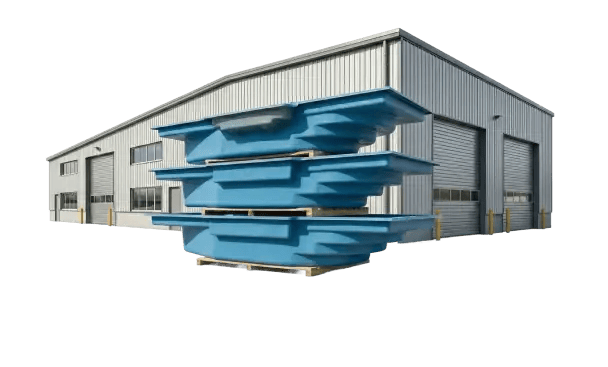
One of the most misunderstood parts of the fibreglass pool installation timeline is the manufacturing lead time. Your pool shell isn't sitting in a warehouse waiting for you — it's made to order in an Australian factory.
| Season | Typical Manufacturing Lead Time | Why |
|---|---|---|
| Autumn / Winter (Mar–Aug) | 4–6 weeks | Lower demand; faster factory throughput |
| Spring / Early Summer (Sep–Nov) | 4–6 weeks | Demand rising; queues building |
| Peak Summer (Dec–Feb) | 6–8 weeks | Maximum demand; factories at capacity |
The critical insight here: Phase 3 and Phase 2 can and should run at the same time. Place your order and simultaneously lodge your permit application. That simple piece of planning can save you almost two months.
CFPK policy is the deposit is fully refundable if the permit application is declined by council which gives customers confidence to run the concurrent process of ordering and permits without financial risk.
Phase 4: The Physical Installation (Days 1–14)
For a standard in-ground fibreglass pool on a typical residential block, the physical work typically runs 5-14 days from the first excavator arriving to the pool being filled and operational.
What happens each day?
- Day 1 - Site preparation & excavation: The excavator arrives and begins digging to the precise dimensions of your shell. Soil is removed from the site and temporary fencing is erected for site safety.
- Day 2 - Shell delivery & crane placement: Your fibreglass shell is transported to site on a truck and craned into the excavated hole. Pre-plumbing and lighting connections are made, and the shell is levelled.
- Days 2–3 - Plumbing, electrical & backfill: Pipework is run from the shell to the equipment pad. Backfilling begins simultaneously with filling the pool with water - the water pressure must balance the backfill pressure to prevent the shell from bowing or lifting.
- Days 4–14 - Completion, inspection & commissioning: The backfill is completed. Equipment is commissioned and water chemistry is balanced. A final inspection by your Building Surveyor or Certifier is required before the pool can be lawfully used.
What site conditions affect the installation timeline?
| Site condition | Typical time added | Notes |
|---|---|---|
| Sloped or terraced block | 2–5 days | Extra excavation and possible retaining walls required |
| Rock or hard clay subsoil | 1–4 days | Specialist rock-breaking equipment may be needed |
| Restricted side access (<2.5m) | 1–3 days | Smaller excavation machinery required |
| High water table | 1–3 days | Dewatering during excavation may be required |
| Trees to remove or roots to clear | 1–2 days | Council approval for removal may also be needed |
Phase 5: Fencing, Paving & Landscaping (Days 3–21 Post-Installation)
Your pool may be in the ground and full of water, but you can't legally swim in it yet. Before your first swim is permitted, a compliant pool safety barrier must be in place and inspected. This is a non-negotiable requirement under Australian law and the relevant Australian Standard (AS 1926.1-2012).
Temporary vs. permanent fencing
During the installation itself, a temporary safety barrier is erected on the first day of excavation as required by law. The permanent pool fence must be completed and certified before you can use the pool.
Paving and landscaping
Realistic timeframes:
- Basic concrete surrounds: 3–5 days (including cure time before use)
- Pavers or natural stone: 3–7 days
- Full landscaping (turf, garden beds, decking): 1–3 weeks
- Outdoor entertaining area or pergola additions: 2–4 weeks
What Can Delay Your Timeline (And By How Much)?
| Delay factor | Typical time added | How to minimise it |
|---|---|---|
| Permit application submitted incomplete | 2–4 weeks | Use a licensed certifier who prepares the documentation for you |
| Peak-season permit queues | 2–6 weeks | Start the approval process in winter; apply early |
| Peak-season manufacturing queue | 2–4 weeks vs. off-peak | Order your shell in autumn or winter |
| Wet weather during excavation | 1–5 days | Build a weather buffer into your schedule |
| Subcontractor scheduling gaps | 3–14 days | Book trades in advance; coordinate them before install day |
| Unexpected rock or services during excavation | 2–7 days | Arrange a soil type assessment before locking in your install date |
| Fencing contractor backlog in peak season | 1–3 weeks | Book your fencer at the same time as you order your pool |
A practical rule of thumb: take your best estimate for the total timeline and add two weeks.
The Master Timeline: From Decision to First Swim
| Scenario | Total Timeline (First Enquiry to First Swim) |
|---|---|
| Best case — off-peak order, fast approval, ideal site, quick trades | ~4 months |
| Typical — spring order, standard approval, moderate site prep | ~5–6 months |
| Peak season — summer order, busy certifiers, peak manufacturing queue | ~7–9 months |
When do I need to start planning to swim by summer?
- To swim by summer, place your order by late March to early April at the latest
- For a relaxed timeline with buffer, aim to have your order confirmed and permit application submitted by the end of February
- If you're reading this in October or November and want a summer pool, act immediately and engage a certifier right away.
→ Related reading: When Is the Ideal Season to Start Your DIY Fibreglass Pool Project?
Frequently Asked Questions
Can I get council approval and manufacturing happening at the same time?
Yes, and you should. This is one of the most effective ways to reduce your overall timeline. Once you've confirmed your shell choice and placed your order, immediately begin your permit application. In many cases, your permit will be approved before your shell is ready to be delivered, meaning there's no idle waiting time between phases.
What time of year is fastest for pool installation in Australia?
Autumn and winter (March to August) offer the shortest overall project timelines. Manufacturing lead times are 12–14 weeks rather than 16–20 weeks, permit queues are shorter, and installer availability is higher. If you want to be swimming by the following summer, ordering in autumn is the smartest approach.
Does a DIY fibreglass pool take longer to install than a professionally installed one?
The physical installation timeline is essentially the same. What changes with the DIY pool model is who coordinates the trades and manages the timeline. With CFPK's support team available 7 days a week, most customers find the coordination straightforward. The main advantage is cost savings, not time.
What has to happen after installation before I can swim?
Your permanent pool safety barrier (fence) must be installed and certified as compliant with AS 1926.1-2012. A final inspection by your Building Surveyor or Certifier must be completed and a sign-off issued. Water chemistry needs to be balanced. In most cases, this is achievable within 1–2 weeks of the physical installation being completed.
Ready to Start Planning?
Understanding the fibreglass pool installation time from end to end puts you in the best possible position to plan confidently. The earlier you start, the more control you have over the timeline and the more likely you are to be swimming exactly when you planned.
Download CFPK's free pool planning e-guide for a full checklist of everything you need to know before you buy or request your personalised DIY pool kit quote today.


