.svg)





 Affordable Financing
 Below Ground Range Colours
 Fibreglass Pool Install Stages
How deep should a pool actually be? It sounds like a simple decision until you start researching it. Then the range of opinions widens fast - 1.2m? 1.8m? Flat bottom or graduated? Deep end or no deep end? And underneath all of it, what do Australian safety regulations actually require?
The honest answer is that there’s no single correct depth. The right depth depends on who will use the pool, what they’ll use it for, and how those needs may change over time. This guide explains what Australian regulations actually require and how to match pool depth to your family and lifestyle.
Quick Answer: How Deep Should a Pool Be?
For most Australian backyard pools, the ideal depth is between 1.0m and 1.7m. This gives families a shallow area for standing and play, while still providing enough depth for proper swimming and jumping in from the pool edge.
Typical depth ranges include:
-
1.0m–1.2m shallow end for children and water play
-
1.2m–1.5m for casual swimming and entertaining
-
1.6m–1.8m deep end for older kids and adults
-
2.0m+ if the pool is designed for diving
Most modern Australian family pools use a graduated depth profile between 1.0m and 1.7m, which balances safety, usability and running costs.
What Australian Regulations Actually Say About Pool Depth
This is where many pool buyers get confused. People assume there are specific minimum depth requirements written into Australian law. There aren't, at least not in the way most people expect.
What Australian regulations do govern, firmly and consistently, is access to your pool. Under the National Construction Code (NCC) Volume Two and the associated Australian Standard AS 1926.1, any pool or spa capable of holding more than 300mm of water must have a compliant safety barrier installed. That 300mm figure is the legal threshold that defines a "swimming pool" for regulatory purposes and it triggers the full suite of fencing and barrier requirements.
The barrier standard: AS 1926.1
AS 1926.1 is the primary Australian Standard covering pool safety barriers. It was revised in 2024 with updated definitions, clearer diagrams, and improved guidance on non-climbable zones, all designed to make compliance easier to understand and apply. Key barrier requirements under the standard include:
-
Safety fence height: minimum 1.2m
-
Ground gap below fence: maximum 100mm
-
Vertical openings in fence: maximum 100mm
-
Gates: must be self-closing and self-latching
-
Non-climbable zone on pool side: 900mm clear of footholds
State and territory variations apply. Queensland uses its own Pool Safety Standard (QDC MP 3.4), which adopts a modified version of AS 1926.1-2007. The ACT is transitioning to updated requirements with a deadline of May 2028. Always check your state's specific requirements, and when in doubt, contact your local council for confirmation before you build.
How Deep Does Your Pool Need to Be? A Guide by Use Case
Young children and water play
For young children, shallower is safer and more functional. A shallow end in the range of 1.0m–1.2m gives toddlers and young kids a space where they can stand, splash and build water confidence without being out of their depth. Parents can supervise easily from the pool edge or stand in the shallow section themselves.
A flat-bottom pool around 1.0m–1.3m is often preferred for families with children under 8. The consistent depth makes supervision easier and works well for inflatables, pool toys and busy family pool days.
It's important to remember that no pool depth replaces supervision. Young children should always be actively supervised around water regardless of how shallow the pool is.
Something many families notice after a few summers is that the deeper section gradually becomes the jumping zone. What starts as a quiet shallow play area for toddlers often turns into a launch pad for cannonballs a few summers later.
General family swimming
For a pool that serves mixed ages, kids, teenagers and adults, a graduated depth profile in the range of 1.2m–1.7m is the most versatile design. The shallow end is accessible for younger swimmers and casual lounging; the deeper end gives older kids and adults the water volume they want for proper swimming, floating and dive-ins from the pool edge.
This range also aligns well with the depth profiles of most Australian fibreglass pools. A gentle gradient from around 1.0m–1.2m at the shallow end to 1.7m–1.9m at the deep end covers the full spectrum of family use without pushing into the excavation and cost territory of a deep pool.
Lap swimming
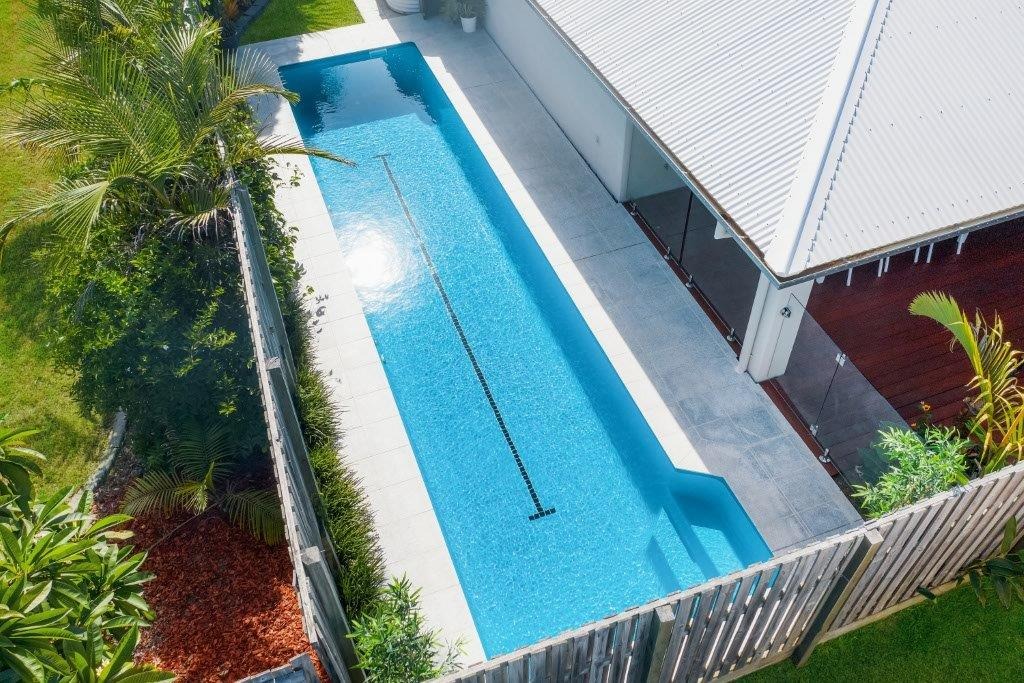
Here's something that surprises people: lap swimming doesn't actually require deep water. It requires length and consistent depth. A flat-bottom pool at 1.2m–1.4m is perfectly suited for serious recreational lap swimming - deep enough to execute a tumble turn without hitting the bottom, but no deeper than necessary.
For lap swimming, uninterrupted length matters far more than depth. An 8m–12m pool at a consistent 1.4m usually provides a better experience than a shorter pool with a deep end.
Diving
Safe diving generally requires at least 2.0m of depth, with deeper water strongly recommended for diving boards. Most pool manufacturers advise 2.4m or more for any board installation. This is a well-established safety guideline that applies to any diving activity including diving boards and springboards.
The honest note for fibreglass pool buyers: dedicated diving pools are uncommon in the residential fibreglass market. The depth required for safe diving adds significantly to excavation costs, increases water volume (and therefore chemical and heating costs), and is physically possible but unusual in standard fibreglass shell designs. Most 9m+ fibreglass pools reach 1.8m–2.2m at their deepest, which sits at or near the minimum safe diving depth.
If diving is genuinely important to your family, discuss it explicitly with your pool supplier before selecting a model. And check your local council's requirements as diving board installations often require additional planning permits and insurance considerations.
Quick Reference: Depth by Activity
|
Activity / Use |
Recommended depth |
Depth type |
Notes |
|---|---|---|---|
|
Toddlers / water play |
1.0m–1.2m |
Flat or very gentle slope |
Shallow end; consistent depth preferred |
|
Young children (5–12) |
1.0m–1.2m |
Flat bottom or shallow end |
Easy supervision; inflatables work well |
|
General family use |
1.2m–1.7m |
Graduated |
Most versatile; covers all ages |
|
Recreational swimming |
1.2m–1.5m |
Consistent or gentle slope |
Comfortable for adults to stand/swim |
|
Lap swimming |
1.2m–1.4m |
Flat/consistent |
Length matters more than depth |
|
Casual deep-end diving |
Min. 1.8m–2.0m |
Deep end |
Check council requirements; rare in fibreglass |
|
Springboard diving |
2.4m–3.5m+ |
Deep end |
Most manufacturers recommend 2.4m+; concrete typical |
Flat Bottom vs Graduated Depth: Which Design Is Right for You?
Once you’ve decided roughly how deep the pool should be, the next question is how that depth is distributed across the pool.
Flat-bottom pools
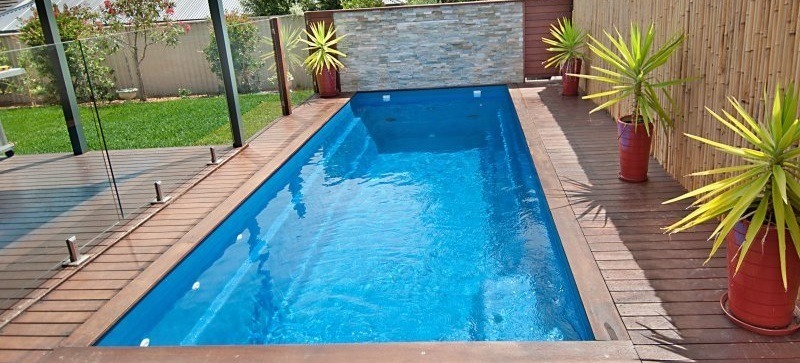
A flat-bottom pool has a consistent depth from one end to the other. Step in at any part of the pool and it’s the same depth everywhere. This design is typical of above-ground and below-ground plunge pools, compact family pools and lap pools.
The advantages are real: young children are equally safe anywhere in the pool, cleaning is simpler because there's no gradient to work against, and the design is generally less complex to install. If you have a backyard where easements, rock or a high water table prevents the installation of a graduated depth pool, flat bottom pools are a great workaround.
If you don’t have site restrictions, families with young kids, or buyers who want a low-maintenance pool that's primarily used for cooling off and casual play, a flat bottom is often the right call. Just keep in mind that in five years, those little kids will be much bigger kids who are confident swimmers and may like doing bombies (even though you tell them they are not allowed!), which are not well suited to shallower depths.
Graduated depth
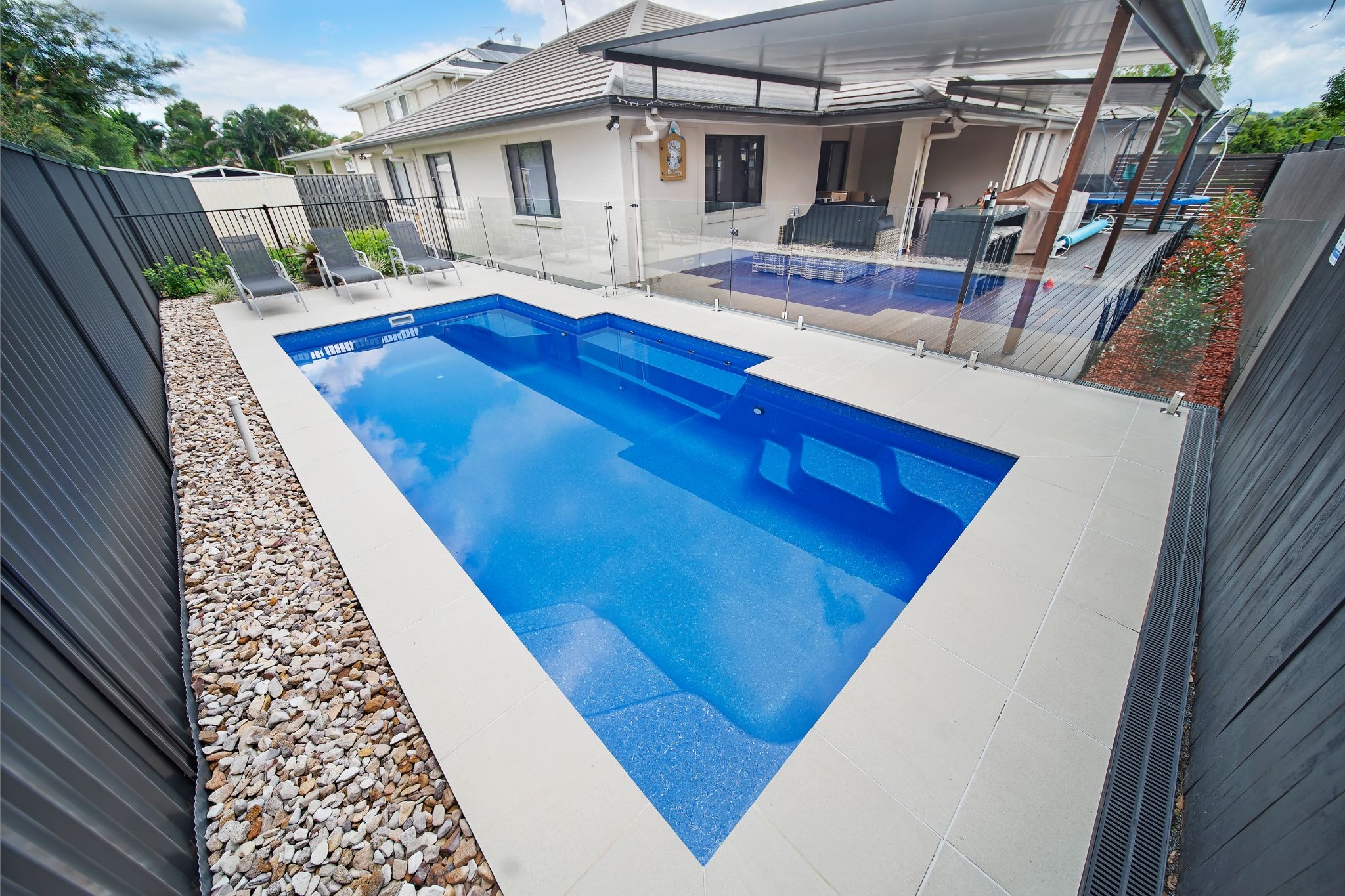
A graduated pool transitions from a defined shallow end to a deeper end. This is typically 1.0m–1.2m at the shallow end rising to 1.6m–1.9m at the deep end, with a gradual slope between. This is the profile most people picture when they imagine a "proper" backyard pool.
The benefit is versatility. Young children stay in the shallow end; older kids and adults enjoy the deeper water; the pool can accommodate different activities simultaneously. The trade-off is marginally more complex installation and slightly higher cleaning effort.
Beach entry
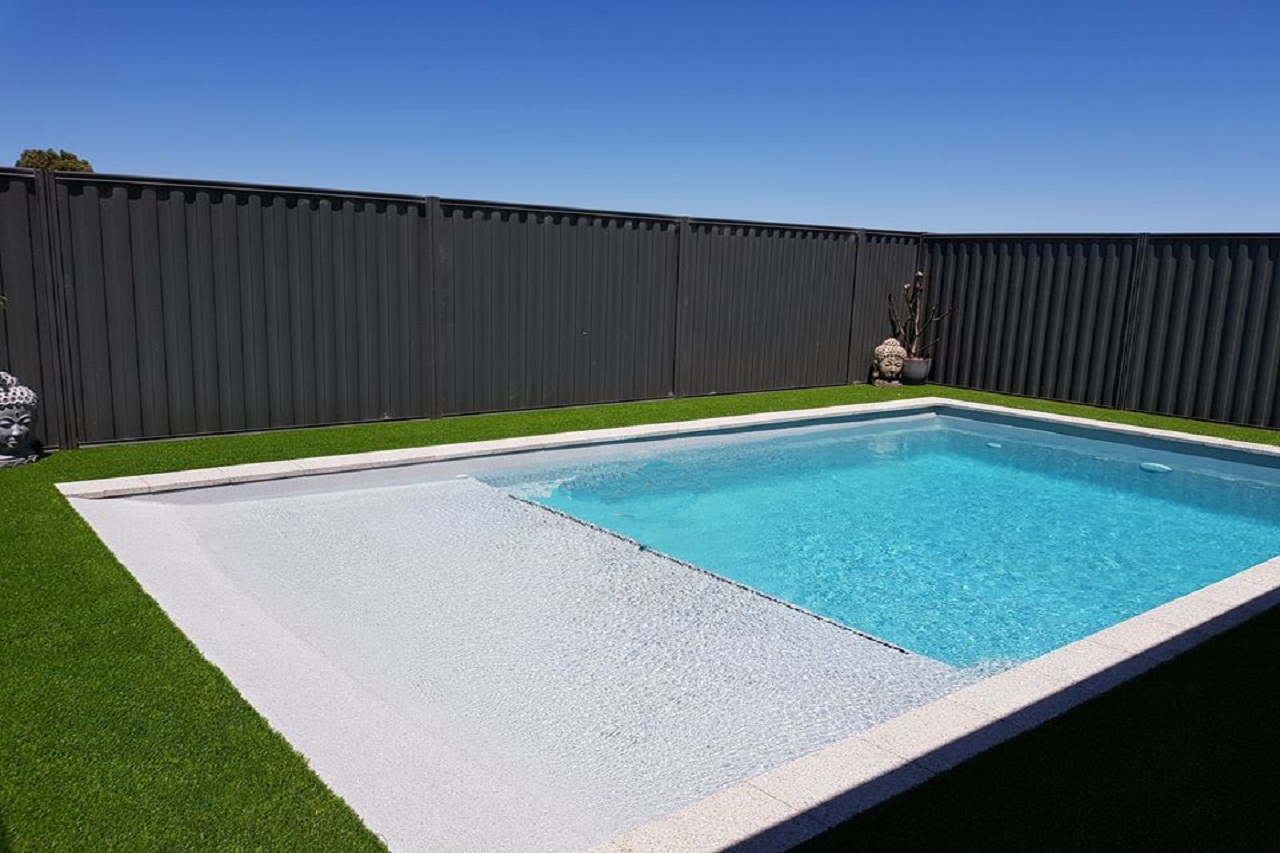
A beach entry pool is a variation of the graduated approach where the pool begins at ground level with a zero depth and gently slopes into the water, replicating the feel of walking into the ocean. It's an increasingly popular design choice for Australian backyards, particularly for families who want very young children or less mobile users to have fully accessible entry.
CFPK's Bondi pool is designed around this concept - the 2.2m walk-in beach entry starts at ground level, slopes to 30cm, then drops into a deep end of up to 1.9m. It's an unusually accessible design that suits families across a wide age range.

How Depth Affects Cost, Maintenance and Running Costs
Pool depth isn't just about how the pool feels to swim in. It also affects what you'll spend to build it and what you'll spend running it every year.
Upfront costs
Deeper pools require more excavation and excavation is one of the more significant cost variables in a pool installation. Every extra 200mm of depth means more soil removed and material for backfilling around the shell. The difference between a 1.4m and a 1.8m pool in excavation cost alone can be around $800 - $1,000 on a standard suburban block.
On DIY installations we often see homeowners initially planning a very deep pool, then rethinking it once they realise how much additional soil needs to be removed from site.
Water volume and running costs
A deeper pool holds more water which means more of everything required to maintain it. More chemicals to keep the water balanced. More heat to bring it to a comfortable swimming temperature and maintain it through cooler weather. A larger pump load to circulate the full volume on the required daily schedule. Owners also notice the difference when heating the pool. Larger water volume takes longer to warm up at the start of the swimming season, which is one reason many modern family pools avoid unnecessary depth.
The difference between a 1.4m and 1.7m pool isn’t huge, but it adds up over years of ownership. It’s worth asking whether you’ll regularly use the deeper section or spend most of your time in the shallower half of the pool.
The fibreglass practical ceiling
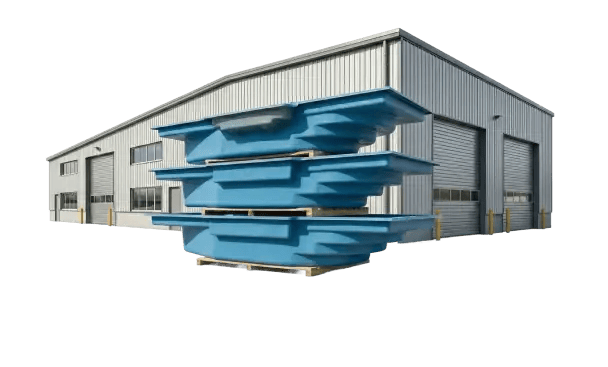
There's a structural and transport consideration unique to fibreglass pools. The shell is manufactured at a factory and transported to your site by road. This places practical limits on both width and, to a degree, depth - most residential fibreglass shells max out at around 1.9m–2.2m at their deepest point. If you need more depth than that for a specific purpose (dedicated diving, for example), concrete becomes the more appropriate construction method.
→ Understand the full cost picture: What Does a Fibreglass Pool Cost?
CFPK Pool Depths: What the Range Actually Offers
Every CFPK pool model has a defined depth profile that's been designed around how that pool will typically be used. Here's how the range breaks down:
|
Model |
Depth profile |
Min depth |
Max depth |
Best for |
|---|---|---|---|---|
|
Cove / Lindeman |
Flat |
1.2m |
1.2m |
Compact courtyards; water play |
|
Easy Access Plunge |
Flat |
1.4m |
1.4m |
Accessible use; all ages |
|
Daydream |
Graduated |
1.0m |
1.55m |
Young families; shallow end play |
|
Kimberley |
Graduated |
1.3m |
1.77m |
Mid-size with depth flexibility |
|
Hayman |
Graduated |
1.1m |
1.97m |
Versatile family use |
|
Whitsunday Plunge |
Graduated |
1.2m |
1.70m |
Entertaining; mixed ages |
|
Bondi |
Beach entry |
0m |
1.9m |
Accessible entry; deep-end swimmers |
|
Noosa |
Flat |
1.4m |
1.4m |
Lap swimming; fitness focus |
The depth range across the CFPK range, from the flat 1.2m of the Cove to the 1.9m deep end of the Bondi, covers the full spectrum of typical Australian family use. No model in the range is designed for springboard diving, which reflects both the practical limits of fibreglass construction and the reality that very few residential pools are used for that purpose.
→ Browse the full pool range: Discover the Perfect DIY Pool for Your Backyard
→ Not sure what size suits your block? Read: Most Popular Pool Sizes for Australian Backyards
Making the Decision: Matching Depth to Your Family
The most common mistake people make when choosing pool depth is designing for the pool they imagine using, rather than how they'll actually use it.
We see this quite often with new pool owners. Someone designs a 1.9m deep end because it sounds impressive on paper, but after the pool is installed they realise most of their swimming actually happens in the 1.0m–1.4m zone. The deeper section ends up being used mainly for jumping in or the occasional bombie rather than everyday swimming.
The same thing happens the other way around too. Parents sometimes choose a shallow flat-bottom pool for toddlers, only to find five years later that those toddlers have become confident swimmers who want a deeper section to jump into.
Neither outcome is wrong but both are worth thinking about honestly before the shell goes in the ground.
A practical decision framework
-
Start with the youngest or least confident swimmer. Their comfort and safety in the shallow section should set your minimum requirement. If you have toddlers now, a shallow end of 0.8m–1.0m makes sense.
-
Think 5–10 years ahead. A graduated pool that works for young children today will still work for teenagers later. A flat 1.2m pool might feel limiting once those kids want to actually swim.
-
Be honest about the deep end. A 1.9m deep end sounds impressive on paper. In practice, most people spend the majority of their pool time in 1.0m–1.4m of water. Unless you have a specific need for deeper water, you're paying for excavation and ongoing running costs for a section of pool that rarely gets used.
-
Match depth to the pool's primary purpose. Entertaining-focused pool? Shallower is friendlier. Fitness-focused? Consistent flat depth and length matter most. Family all-rounder? Graduated 1.0m–1.7m covers almost everything.
The sweet spot for most Australian families
A graduated profile from around 1.0m–1.2m at the shallow end to 1.6m–1.8m at the deep end. It's accessible for young children, satisfying for adults, and deep enough to feel like a real pool without pushing into unnecessary cost and maintenance territory.
→ Ready to plan your project? Read: Getting Started: Planning Your New DIY Fibreglass Pool
→ Choosing the right size to go with your depth: How To Choose The Right Size Pool For Your Family

Frequently Asked Questions
What is the minimum depth for a backyard pool in Australia?
Australian regulations don't prescribe a minimum swimming depth for residential pools. What they do require is that any pool capable of holding more than 300mm of water must have a compliant safety barrier installed under the National Construction Code and AS 1926.1. The actual swimming depth is a design decision based on use, not a legal minimum. Always confirm your state's specific barrier requirements with your local council.
How deep does a pool need to be for lap swimming?
A consistent depth of 1.2m–1.4m is sufficient for recreational lap swimming as it is deep enough for a comfortable tumble turn without touching the bottom. You don't need a deep pool for lap swimming; you need length and a consistent flat depth. Most Australian residential lap pools run at around 1.4m throughout their full length.
Is a 1.5m deep pool safe for children?
A 1.5m pool is safe for children who can swim, but is not appropriate for young non-swimmers or toddlers without constant supervision and appropriate floatation. Most family pools are designed with a graduated depth that includes a shallower section of 1.0m–1.2m where young children can stand. Regardless of depth, Australian law requires a compliant pool safety barrier around any pool holding more than 300mm of water.
Do I need a deeper pool if I want a diving board?
Yes. Safe diving requires a minimum of 2.0m depth at the point of entry, and springboard diving typically requires more. Most residential fibreglass pools reach 1.8m–2.0m at their deepest, placing them at the minimum threshold. Dedicated diving pools are uncommon in the residential fibreglass market and are more typically constructed in concrete. If diving is a firm requirement, discuss it with your pool supplier and local council before proceeding, as additional permits and insurance considerations may apply.


