.svg)





 Affordable Financing
 Below Ground Range Colours
 Fibreglass Pool Install Stages
Most people start the pool research process convinced they want the biggest pool that'll fit in their backyard. Then reality sets in. The block isn't as large as they thought, the budget has edges, and actually, a slightly smaller pool with room for a decent deck, some landscaping, and a BBQ area sounds considerably better.
So what size do most Australians actually end up choosing? And what separates a pool that becomes the centrepiece of your backyard from one that feels either cramped or cavernous?
This article pulls together real Australian market data on the most popular pool sizes, breaks down each size tier with actual dimensions and use cases, and gives you a practical guide to matching pool size with backyard, lifestyle and budget.
What the Numbers Show: Australia's Most Popular Pool Sizes in 2025
The data tells a clear story. In the fibreglass segment, which is the dominant choice for DIY pool owners, 7m and 8m pools are neck and neck, together accounting for more than half of all purchases. After that, 10m pools follow at 15%, while 9m and 11m+ lengths account for around 9% each.
For concrete pools, the picture is similar: 8m leads at 25%, followed by 7m at 20% and 10m at 17%. The message across both pool types is consistent. The mid-size 7–9m range is where most Australians land.
There's also a broader trend worth noting. Average pool sizes in Australia have been gradually shrinking over the past decade as residential block sizes have reduced, particularly in new suburban developments. This has driven steady growth in smaller pools and plunge pools, especially in urban markets like Sydney, Melbourne and Brisbane where outdoor space is at a premium.
Small Pools and Plunge Pools: Up to 6m
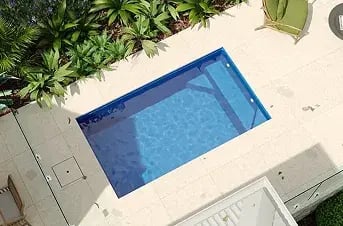
Small pools and plunge pools have moved from niche product to mainstream choice over the past five years, and the trend shows no signs of slowing. If you're working with a compact block, a courtyard-style outdoor area, or simply don't need a full-size swimming pool, this category delivers a lot for its footprint.
Typical dimensions
Plunge pools typically run between 3m and 6m in length, with widths from 2.5m to 3.5m. Depth varies with either a flat bottom at around 1.2m–1.4m, which makes them accessible for all ages and suits the relaxation-first design brief most plunge pools are built around. Or, a 1.1m shallow end and 1.65cm deep end for a more traditional design.
What you actually get
A plunge pool isn't designed for lap swimming or running races across the width. It's designed for cooling off, entertaining, and creating a genuine water feature in a smaller space. They work exceptionally well for:
-
Homes with a courtyard or narrow rear yard
-
Properties where the pool will be used mostly by adults
-
Buyers who want a low-maintenance, lower-running-cost water feature
-
Anyone who wants more outdoor space left over for decking, alfresco dining or landscaping
The running cost advantage is real. Less water means less chemicals, less heating and a smaller pump load. For households that want a pool but are mindful of the ongoing bill, a compact pool makes the numbers work better year-round.
CFPK below ground and above ground models in this range
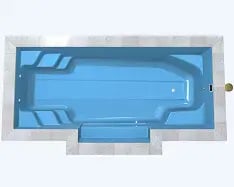
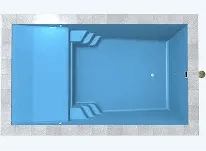
The Easy Access Plunge Pool (4.5m × 3.0m, 1.4m depth) is purpose-built for compact spaces and accessible use with non-slip steps, a full-width bench seat, and a design that suits all ages. The Whitsunday Plunge Pool (available in 4.5m and 5.5m) adds dual entry steps and a full-length bench seat for a slightly roomier layout. The Kimberley range above ground pool range (3.7m–5.7m) rounds out the compact options with a generous bench and up to 1.89m depth for those who want a bit more headroom.
→ Explore the plunge pool range in more detail: DIY Plunge Pool Kit Australia — Costs, Construction and More

Mid-Size Family Pools: 7m–9m — The Australian Sweet Spot
This is where the majority of Australian pool buyers land, and there are good reasons for it. A pool in the 7m–9m range is versatile enough to serve a full family across different ages and uses, fits comfortably in a typical suburban backyard, and doesn't push running costs into uncomfortable territory.
What 7m, 8m and 9m actually feels like
There's a meaningful difference between a 7m and a 9m pool that gets lost when you're looking at numbers on a brochure and only becomes obvious once you're standing next to one. The short version:
-
7m pool: Comfortable family pool. Room for kids to play, adults to cool off, and casual swimming. Tight for proper lap swimming but perfectly functional for everything else.
-
8m pool: The most popular single length for good reason. Adds enough extra space to feel genuinely generous — a longer glide across the pool, easier for multiple swimmers at once, and more room for inflatable toys and poolside play.
-
9m pool: Starts to feel spacious and an adult can get a reasonable workout in. Suits larger families or homes where the pool will see heavy use.
The backyard-to-pool ratio
A useful rule of thumb: aim to keep the pool to roughly 25–35% of your usable outdoor area. This leaves room for the safety fencing required by Australian law, a generous surrounding deck, and enough green or landscaped space to make the backyard feel like a place you want to spend time rather than just a pool enclosure. Some homes with larger properties exceed this, while compact urban lots may go higher still. The point is to think about proportion, not just pool size in isolation.
For an average suburban block, a 7m–8m pool with a 3.0m–4m width tends to hit that ratio well. You get a serious pool without sacrificing the rest of the outdoor space that makes the investment worthwhile.
CFPK models in this range
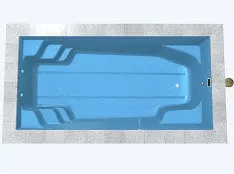
The Hayman is available across a broad 6m–9m range and suits the full spectrum of mid-size family needs. The Bondi (7.2m and 8.2m, 4m-wide swim area, up to 1.9m depth) is a standout at the premium end of this category - the 2.2m walk-in beach entry and generous 4m width make it feel substantially bigger than its footprint, and the deep end gives older kids and adults the depth they want.
Quick Reference: Mid-Size Pool Lengths
|
Length |
Ideal backyard depth* |
Swimmers at once |
Lap swimming? |
Best for |
|---|---|---|---|---|
|
7m |
~12m+ |
3–4 comfortably |
Not really |
Small families, entertaining |
|
8m |
~13m+ |
4–5 comfortably |
Short casual laps |
Most Australian families |
|
9m |
~14m+ |
5–6 comfortably |
Moderate workout |
Larger families, active use |
*Includes pool length, 1.5m buffer each end for fencing and deck. Actual space needed depends on your specific design.
Larger Pools and Lap Pools: 10m+
Larger pools represent a minority of purchases, around 15–18% of the Australian fibreglass market, but they're the right choice for a specific group of buyers. The question isn't whether you can fit one. It's whether the extra size will genuinely be used.
Who actually needs a 10m+ pool
Serious lap swimmers are the obvious candidates. Getting a useful aerobic workout in a pool under 10m is possible but compromised; you spend too much time turning and not enough time in rhythm. A dedicated lap swimmer will be frustrated in an 8m pool within a season.
Large families, particularly those with older teenagers, or households that host regularly, are also well served by the extra length. The difference between 4 swimmers and 8 swimmers in a 9m pool is noticeable. In a 10m+ pool, it's not a problem.
Then there are properties where the block is large enough that a smaller pool would simply look underdone. On a generous rural or semi-rural block, a 7m pool can feel like a postage stamp. Matching pool size to available space is as much about aesthetics as it is about utility.
The cost reality
Larger pools cost more to run every year, not just upfront. More water means more chemicals to keep it balanced, more heat to warm it to a comfortable temperature, and a larger pump load to circulate the full water volume. These aren't dealbreakers, but they're worth factoring into the decision honestly.
A 11m pool typically holds 60–70% more water than an 8m pool of comparable proportions. That differential shows up in your chemical bill, your heating bill, and the time you spend on maintenance across a 10-year ownership period.
Lap pools: a different category
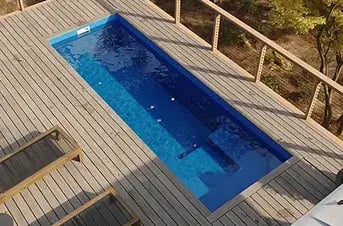
A lap pool trades width for length. Typically long and narrow, around 2.5m–3m wide and 10m–15m long with a flat bottom, they're optimised for uninterrupted swimming rather than general family use. If exercise is the primary purpose of the pool, a lap pool is worth considering seriously.
The CFPK Noosa is designed with this use case in mind, available in 8m and 11m lengths with a consistent 1.4m depth and clear swim corridor. At the shorter end, it works for smaller suburban blocks; at 11m, it delivers a genuinely satisfying fitness swim.
→ Read more: What Does a Fibreglass Pool Cost?

Why Australian Pool Sizes Are Getting Smaller and What It Means for You
If you've looked at older properties with pools, you may have noticed that 1980s and 1990s pools tend to run large at 10m, 12m, sometimes bigger. This isn't nostalgia. It reflects the block sizes of the era.
Australian residential lots have shrunk considerably over the past two decades. The average new-build block in many suburban areas is now 400–500 square metres, compared with 700–900 square metres in older suburbs. Less land means less backyard, which means pool sizing decisions involve real trade-offs between pool size, outdoor living space, and garden area.
The rise of plunge pools and compact pool designs tracks directly with this trend. In dense urban areas, a 4.5m plunge pool that leaves room for a real alfresco area is increasingly preferred over a 9m family pool that dominates the entire rear yard.
The practical takeaway: don't anchor your sizing decision to what your parents had or what the neighbour has. The relevant question is what pool size leaves your backyard feeling like a complete, enjoyable outdoor space - not just a pool with some concrete around it.
Beyond Length: The Dimensions That Actually Change How a Pool Feels
Width is underestimated
Pool buyers fixate on length and frequently underestimate width. In practice, width changes the feel of a pool more than you'd expect. The difference between a 3m-wide and a 4m-wide pool is immediately apparent when you're swimming across it, when kids are playing in it simultaneously, or when you're trying to keep a toddler in arm's reach while they're in the water.
A 3m width is functional. A 4m width feels genuinely spacious. If you're choosing between two pools of similar length, the wider model almost always wins in day-to-day use.
Depth: flat vs graduate
Pool depth is a decision that gets made once and lives with you for the life of the pool. There are two basic approaches:
-
Flat-bottom pools: Consistent depth from end to end, which are typically 1.2m–1.5m. Better for younger children (no deep-end anxiety), easier for inflatables and pool games, and often found in plunge pools and lap pools.
-
Graduated depth: Shallow end transitioning to a deeper end, typically 1.2m–1.4m shallow and 1.7m–1.9m deep. Better for mixed-age families, allows diving (subject to depth requirements), and gives older swimmers a more satisfying water experience.
The average backyard pool deep end depth in Australia is around 1.7m. If you have young children now, a very gentle graduation is worth prioritising. You will use the deep end more as they grow.
The fibreglass transport constraint
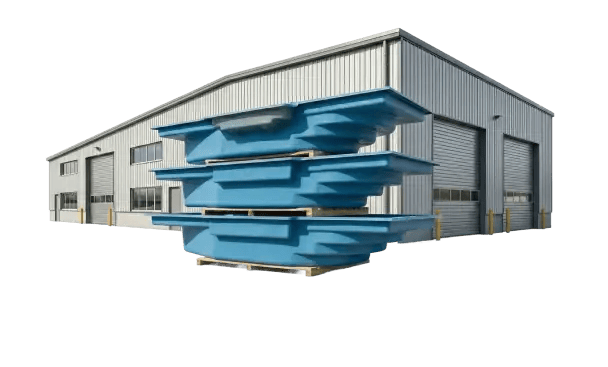
One practical factor unique to fibreglass pools: the shell is manufactured off-site and transported to your property by road. This places a real ceiling on width, typically around 4m–4.2m, because wider shells can't be moved on standard roads. If you've seen a pool design you love but the width is pushing beyond 4m, check the transport specs carefully. For fibreglass, that width ceiling is a genuine constraint, not a guideline.
→ Planning your project from scratch? Read: Getting Started: Planning Your New DIY Fibreglass Pool
Pool Size by Lifestyle: A Quick-Reference Guide
Not sure where you fit? Use this as a starting point. Every backyard is different, but these general guidelines hold true for most Australian households.
|
Your situation |
Recommended size |
Typical dimensions |
CFPK example |
|---|---|---|---|
|
Compact block / courtyard |
Small / plunge |
4m–6m × 2.5m–3m |
Easy Access Plunge, Whitsunday Plunge |
|
Young family (kids under 10) |
Mid-size |
7m–8m × 3.5m–4m |
Hayman, Bondi 7.2m |
|
Larger family / heavy use |
Mid-size to large |
8m–10m × 4m |
Bondi 8.2m, Daintree 10m |
|
Lap swimming / fitness focus |
Lap pool or longer |
10m–12m × 2.5m–3m |
Noosa 11m, Daintree 11m |
|
Entertaining focus, limited space |
Plunge / compact |
5m–6m × 3m |
Kimberley, Whitsunday 5.5m |
|
Large property, show pool |
Large |
10m+ × 4m |
Whitsunday 11m, Daintree 10m |
→ Still deciding? Read: How To Choose The Right Size Pool For Your Family
→ Understand the full cost picture: What Does a Fibreglass Pool Cost?
Frequently Asked Questions
What is the most popular pool size in Australia?
According to 2024 market data, 7m and 8m fibreglass pools are the most popular sizes, each accounting for around 29% of fibreglass pool purchases in Australia. A typical full-size backyard pool runs roughly 8–9m long and 4m wide, with depth ranging from 1.6–1.8m. The 7m–9m length range represents the broadest segment of the Australian market.
What is the average depth of a backyard pool in Australia?
The average depth of a backyard pool in Australia is approximately 1.7m. Pools with a graduated depth typically run from around 1.1m–1.3m at the shallow end to 1.7m–1.9m at the deep end. Plunge pools and flat-bottom pools generally sit at a consistent 1.2m–1.5m.
What pool size suits a small backyard?
For a compact backyard, a plunge pool or small fibreglass pool in the 4m–6m range is typically the best fit. These pools require a smaller footprint, cost less to run, and leave room for decking and outdoor living space. As a general guide, aim for the pool to occupy roughly 25–35% of your usable outdoor area, leaving the rest for circulation, fencing and outdoor entertaining.
Is an 8m pool big enough for a family?
Yes — an 8m pool is the single most popular fibreglass pool size in Australia for a reason. It comfortably accommodates 4–5 swimmers at once, provides room for kids' games and activities, suits casual lap swimming, and fits well in a typical suburban backyard. For most Australian families, an 8m pool delivers everything they need without pushing running costs higher than necessary.


